Introduction
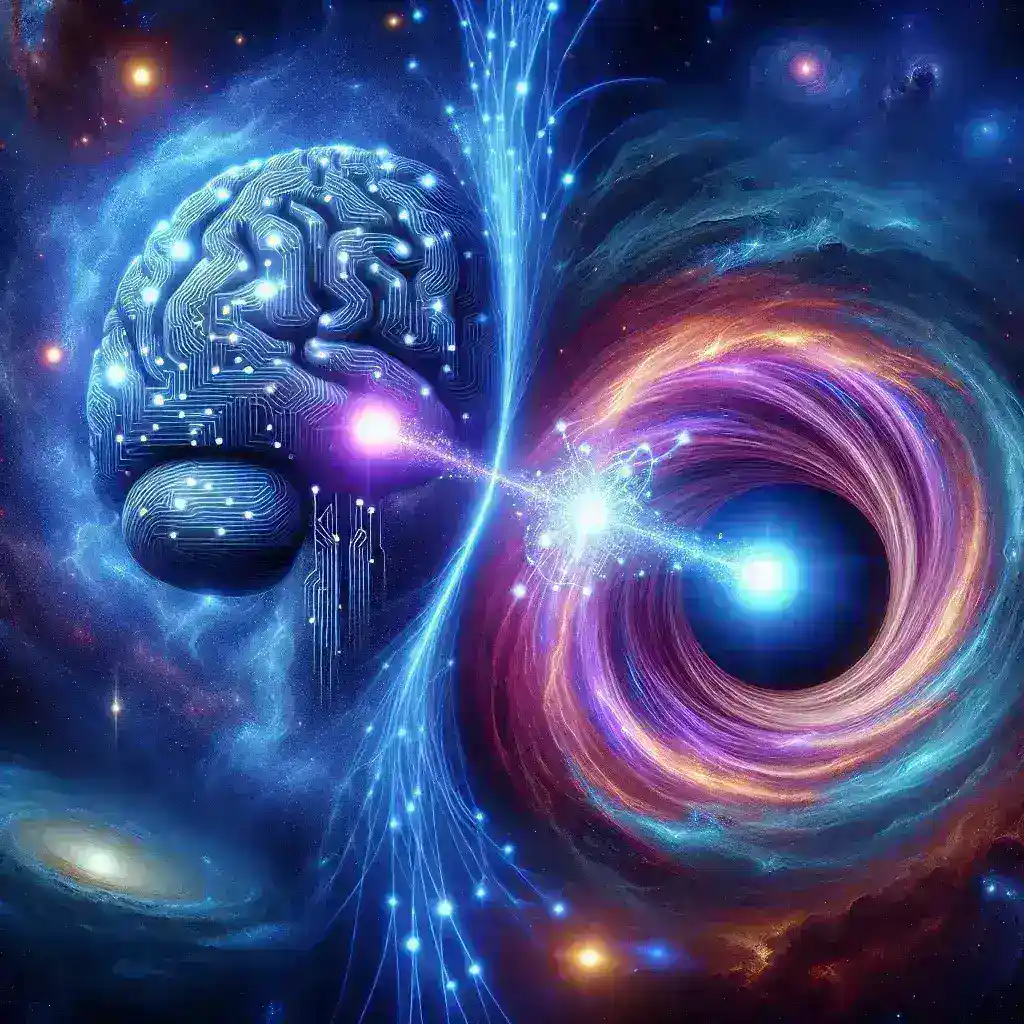
Binary neutron star mergers are among the most fascinating and energetic events in the universe. These catastrophic collisions lead to the formation of neutron star remnants and are responsible for the creation of heavy elements like gold and platinum. With the advent of artificial intelligence (AI), researchers are now modeling the complex dynamics of these mergers with unprecedented accuracy. This article delves into the role of AI algorithms in understanding the intricate processes involved in binary neutron star mergers, their historical context, current advancements, and future prospects.
Historical Context of Binary Neutron Star Mergers
To appreciate how AI is revolutionizing our understanding of binary neutron star mergers, it is essential to review the historical context. The first confirmed detection of gravitational waves from a binary neutron star merger, GW170817, occurred in August 2017. This landmark event marked a new era in astrophysics, allowing scientists to observe these cataclysmic events in real-time. Prior to this, theoretical models were primarily based on numerical simulations and analytical formulations.
The Role of Computational Models
Traditional computational models used to predict the outcomes of binary neutron star mergers relied heavily on hydrodynamics and general relativity. These complex models often required significant computational resources and time, making it challenging to iterate rapidly on new insights. The sudden acceleration of technological advancements in AI has provided fresh avenues for exploring these complexities.
AI Algorithms in Action
AI algorithms, particularly machine learning models, have emerged as crucial tools for modeling the dynamics of binary neutron star mergers. By training on vast datasets generated from simulations and observational data, AI can identify patterns and make predictions that would be difficult for traditional methods to achieve.
Types of AI Algorithms Used
- Neural Networks: Deep learning neural networks are particularly useful for processing complex datasets, allowing for the extraction of features that are indicative of merger dynamics.
- Regression Models: These models help in predicting the outcomes based on various input parameters, such as mass and spin of the neutron stars.
- Reinforcement Learning: This form of AI allows algorithms to learn optimal strategies by interacting with the environment, making it possible to improve predictions iteratively.
Data Sources for AI Training
The effectiveness of AI algorithms in modeling binary neutron star mergers heavily relies on the quality and quantity of data available. Major sources of data include:
- Gravitational Wave Detections: Observatories like LIGO and Virgo provide real-time data from merger events.
- Astrophysical Simulations: Numerical simulations create rich datasets that AI can use to learn the physics of mergers.
- Electromagnetic Observations: Multimessenger astronomy allows researchers to study the aftermath of mergers through gamma-ray bursts and kilonovae.
Advantages of AI in Modeling Dynamics
The integration of AI algorithms into the study of binary neutron star mergers presents significant advantages:
- Speed: AI can analyze vast amounts of data in a fraction of the time compared to traditional methods.
- Accuracy: Machine learning models can uncover subtle relationships in data, leading to more precise predictions.
- Scalability: AI algorithms can be easily adapted to incorporate new data and insights, making them highly versatile.
Real-World Applications
The application of AI algorithms in astrophysics has yielded several real-world advancements:
- Enhanced Detection: AI techniques are improving the detection rate of gravitational wave events, allowing for better characterization of neutron star mergers.
- Improved Models: Researchers are developing more sophisticated models that accurately represent the physics involved in mergers, leading to an understanding of phenomena such as neutron star oscillations.
- Predictive Analytics: AI is being used to predict the likelihood of future merger events based on historical data.
Future Predictions and Implications
As AI continues to evolve, its applications in studying binary neutron star mergers are expected to expand significantly. The future holds promising possibilities:
Advancements in Machine Learning
With ongoing advancements in machine learning algorithms, researchers anticipate more refined models that can account for a broader range of variables. These developments could lead to:
- Better Understanding of Neutron Star Properties: AI could help unravel the complex internal structure of neutron stars, shedding light on fundamental physics.
- Enhanced Multimessenger Astronomy: Combining gravitational wave data with electromagnetic observations will provide a more comprehensive view of merger events.
- Real-Time Analysis: Future AI systems may enable real-time detection and analysis of merger events, enhancing our ability to respond to these cosmic occurrences.
Challenges and Limitations
Despite the tremendous potential of AI in modeling binary neutron star mergers, several challenges remain:
- Data Quality: The reliability of AI predictions is contingent on the quality of input data, necessitating rigorous data processing and cleaning.
- Interpretability: Many AI models operate as ‘black boxes,’ making it difficult to interpret their predictions and understand the underlying physical processes.
- Integration with Traditional Models: Ensuring that AI models complement rather than replace traditional computational methods presents a significant challenge.
Cultural Relevance and Impact
The implications of AI innovations extend beyond astrophysics into broader cultural and scientific contexts. As we continue to explore the cosmos, the intersection of technology and science fosters a renewed sense of wonder about our universe. The use of AI in studying binary neutron star mergers exemplifies how technology can deepen our understanding of fundamental cosmic events and inspire future generations of scientists.
Conclusion
AI algorithms are transforming the field of astrophysics by modeling the dynamics of binary neutron star mergers with unprecedented accuracy and efficiency. Through continued advancements in machine learning, we stand on the brink of a new era in understanding the universe’s most enigmatic events. The future of AI in this field promises not only improved scientific insights but also a deeper appreciation of the cosmos and our place within it.